The 2025 Met Gala Black fashion theme shifted the conversation from spectacle to significance. The Met Gala has always been fashion’s most theatrical night, but 2025 felt different. This year’s theme: Superfine: Tailoring Black Style. This wasn’t just a celebration. It was a reclamation.
Held on May 5, the event brought Black sartorial history to the forefront, honoring the legacy of dandyism, custom tailoring, and the bold, nuanced ways Black creatives have used fashion to express identity, power, and presence. Gone were the distractions of gimmicky looks. In their place? Precision, reverence, and storytelling through stitches.
The Backstory: Why This Theme Mattered
Inspired by Monica L. Miller’s 2009 book Slaves to Fashion, the 2025 Costume Institute exhibition took on a topic that’s rarely given center stage in major institutions: the historical and cultural impact of Black tailoring. Guest curated by Miller alongside Andrew Bolton, the show traced how Black men and women across centuries used suits, coats, and custom pieces to assert selfhood in a world often set on denying it.
More than 250 pieces were featured, spanning centuries and cities, from the powdered elegance of 18th-century portraits to the rebellious silhouettes of 1940s Harlem to the precision of contemporary luxury designers like Grace Wales Bonner, Dapper Dan, and Telfar Clemens.
This wasn’t about fashion in the abstract. It was about fashion as language, legacy, and liberation. And for the first time, the Met Gala gave the 2025 Met Gala Black fashion theme the institutional spotlight it deserved.
“Tailored for You”
Let’s be honest—Met Gala dress codes are often just suggestions, ignored by half the guest list. But Tailored for Youstruck a deeper chord. It wasn’t about following instructions. It was about interpretation, individuality, and making fashion personal again.
Unlike previous years filled with extravagant gowns and over-the-top theatrics, this carpet was ruled by structure, fit, and intent. It was an open invitation to honor ancestors, heritage, and style codes passed down through generations.
This was the first Met Gala in over two decades to focus specifically on menswear—and it wasn’t just about men. Tailoring became a vessel for everyone to engage with history, bend gender norms, and channel confidence that couldn’t be faked.
Red Carpet Recap
Forget shock value. This year, guests showed up dressed like they had something to say and knew exactly how to say it.
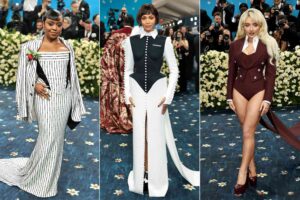
Zendaya, one of the co-chairs, came through in a Louis Vuitton zoot suit designed by Pharrell. It was sharp,swaggering, and brimming with subtext, referencing both Harlem style and her own ability to move effortlessly between glamour and grit. Later, she changed into a second look, sleek, sculptural, and nodding to Black nightlife’s rich visual history.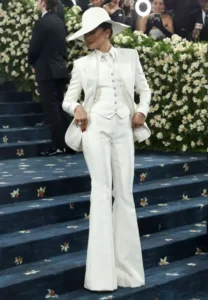
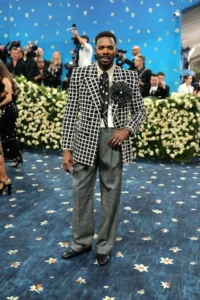
Colman Domingo, also a co-chair, wore a custom Valentino look that quietly echoed the regal grandeur of André Leon Talley. It was all velvet and presence. Nothing flashy. Everything intentional.
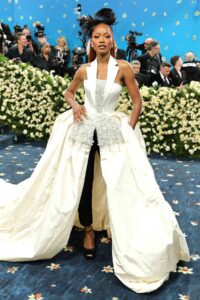
Keke Palmer embodied elegance with an outfit inspired by Dorothy Dandridge.
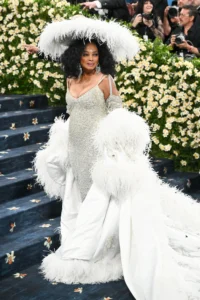
Diana Ross, in a rare red carpet appearance, wore a self-designed look referencing Mahogany, a full-circle moment for one of fashion’s most iconic muses.
And then there was Ava DuVernay, whose outfit honored her great-grandmother. It wasn’t just a nod to family, it was a reminder that fashion’s most powerful statements often come from personal lineage, not trends.

Beyond the Fashion
What happened at the 2025 Met Gala wasn’t just about the visuals. It was about visibility.
For too long, Black fashion history has been edited out or watered down in the mainstream. This year’s gala flipped the script. It acknowledged the brilliance of Black tailoring not as influence, but as origin. As art. As resistance.
The exhibit didn’t just include Black designers. It centered them. It respected the context. And on the carpet, guests followed through with looks that were grounded, researched, and rooted in more than aesthetics.
The result? A red carpet that actually meant something.
Final Thoughts
The 2025 Met Gala didn’t rely on spectacle. It didn’t need to.
Instead, it used fashion to start a conversation that should have happened years ago, one that connects craft to culture, and style to history. Superfine wasn’t about putting on a show. It was about showing up fully, with pride, precision, and purpose.
Fashion is always political. But this year, it was also deeply personal.
That’s why the 2025 Met Gala Black fashion theme will be remembered as a turning point, not just for fashion, but for how we write it into history.
To experience the Met first hand, watch
Make sure to subscribe to the newsletter and follow us on social media to never miss an update!